What is a schedule of conditions?
A detailed record of the property's physical state before the tenancy, lease agreement, or building begins is recorded in a Schedule of Condition (SOC).
Purpose
● It provides clear evidence of the floors, ceilings & built-in units at the start of an agreement to protect both the property owner and the tenant from dispute.
● It helps identify existing wear and tear, making it easier to determine who is responsible for any new damage or deterioration that may occur later.
Key features
The SOC report includes a detailed description of walls, floors, ceilings, windows, doors & built-in fixtures, accompanied by high-resolution photographs and written notes on cracks, stains, or other visible defects. A professional surveyor or property inspector creates this report accurately to avoid disputes.
When to use: At the start of a commercial lease & before major renovations or construction work.
What is an inventory report?
At the start of the tenancy, the property inventory report creates a comprehensive list of everything inside a rental property, along with the condition of each item. This property checklist includes the items that were present and their condition upon the tenant's move-in.
Purpose
From furniture to appliances, the property inventory report shows exactly what items were provided and documents their condition and cleanliness. When the tenancy ends, this record serves as an official record of any security deposit deductions, helping to avoid disputes over missing items or unexpected damage.
Key features
● A proper property inventory report involves a detailed list of all furniture, appliances, decor & even small items like lamps or kitchenware.
● High-quality photographs or videos to provide visual proof of each item's state, along with condition notes that describe cleanliness, working order & any existing marks, scratches, or wear.
● Identifying the changes by taking a property inventory report, both check-in and check-out, by a qualified inventory clerk, letting agent, or property management company
When to use: At the start of the residential rental (check-in) & at the end of the tenancy (check-out).
Learn how real estate agents can streamline documentation with a property inventory transcription service provider
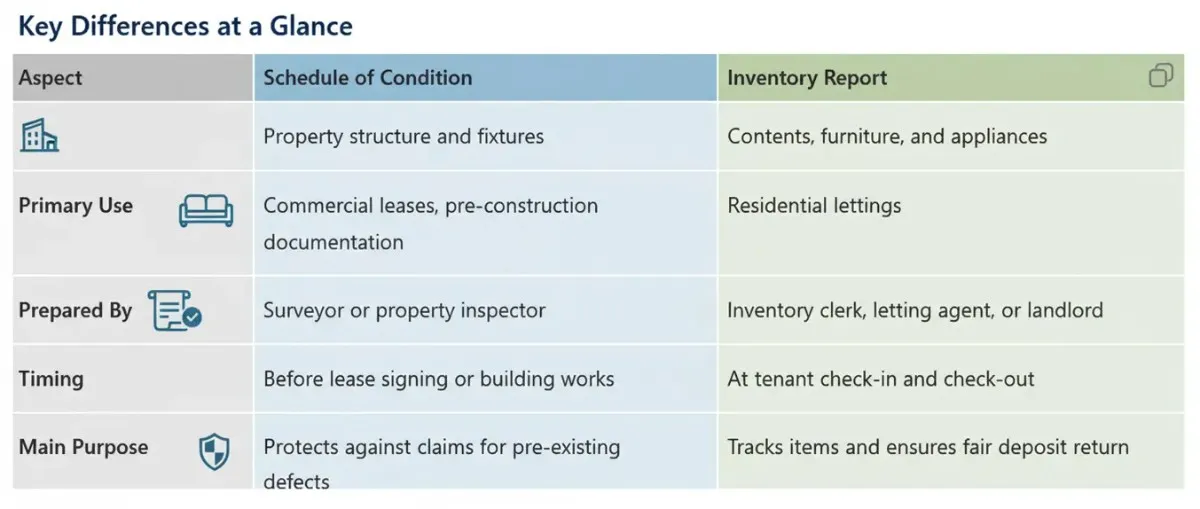
Why both matter
The combined schedule of conditions and an inventory report provide a comprehensive layer of security for everyone involved, protecting various parts of the property. By using both reports can,
● Prevent disputes
● Protect security deposits
● Maintain trust and transparency
The SOC and inventory report ensures complete protection of both the structure and contents for commercial properties, furnished rentals, or homes undergoing renovations.
Tips for landlords and tenants
The following tips will help the landlord and tenant create an accurate schedule of condition or an inventory report. It will be easily accessible when needed.
1. Hiring a professional
To protect the property & avoid disputes, it is essential to partner with professional teams that prepare a schedule of condition or an inventory report properly. The report carries significantly more legal weight when it is created by qualified surveyors, property inspectors, or inventory clerks, rather than being prepared solely by landlords or tenants.
Experienced professionals know exactly what to look for, including subtle issues that can be easily missed, such as small cracks, hidden water damage, or minor defects in furniture and appliances. They ensure the report is accurate, thorough & credible.
2. Using photographs and signatures
Interpretations may occur when we rely on a written description, but clear photographs or videos eliminate any doubt. Sometimes, the quality of fewer images misses tiny scratches on a countertop, fading paint, or a small tear in the sofa fabric. However, video walkthroughs can provide a complete picture of the item's condition in its entirety, including how the items are arranged in the room.
To make the report or document legally binding and ensure everyone's agreement, include dated signatures from both landlords and tenants on the report. The visual proof and signed acknowledgement report provide a powerful layer of evidence in the event of any dispute over a deposit deduction, repair bill, or damage claim. It is helpful to inspect the property's condition at the start of the tenancy.
3. Updating regularly
If the tenancies are carefully maintained, the properties will still naturally change over time. Every day use can cause minor issues, such as fading paint, worn carpets, or tiny cracks. Conducting mid-term inspections or annual reviews helps keep the record accurate and up-to-date.
Regular updates of the record help tenants and landlords identify any new damage, repairs, or replacements as soon as they occur.
Ex: adding details of pipe leaks and a wall being repainted creates a clear timeline of maintenance and changes.
This regular update of records helps avoid confusion, such as distinguishing between issues caused by normal wear and tear and those caused by neglect. At the end of the tenancy, the comprehensive report helps identify the property's condition in both "before" and "after" states, thereby helping to avoid disagreements.
4. Storing safely
Storing documents safely plays a significant role when any dispute arises. It is helpful to inspect the property's condition even years after the tenancy began. Protecting these reports as digital copies in secure cloud storage or on a password-protected external drive ensures that reports remain safe from accidental deletion, hardware failure, or physical damage, such as fire or water leaks.
Duplicate copies on a separate device or sharing access with a trusted property manager or solicitor provide an extra layer of security for the document. In the event of a deposit claim, insurance request, or legal dispute, quick access to the report provides you with peace of mind.
Wrap
1. Schedule of condition - It protects the fabric of the building, like walls, floors, ceilings & permanent fixtures.
2. Inventory report - It protects the items inside the property, such as furniture, appliances, & decor.
The combination of these reports provides a comprehensive picture of the property's condition, both inside and out.
The properly dated and structured reports help to prevent disagreements over damage, repairs, or missing items. It acts as evidence of security deposits, insurance claims & repair costs.
The professional schedule of condition and inventory report for a single apartment or managing an ample commercial space saves time, money & stress for landlords, tenants & property managers.
Get our property inventory report services before your next lease or tenancy begins. Protect your property with confidence.

.webp)